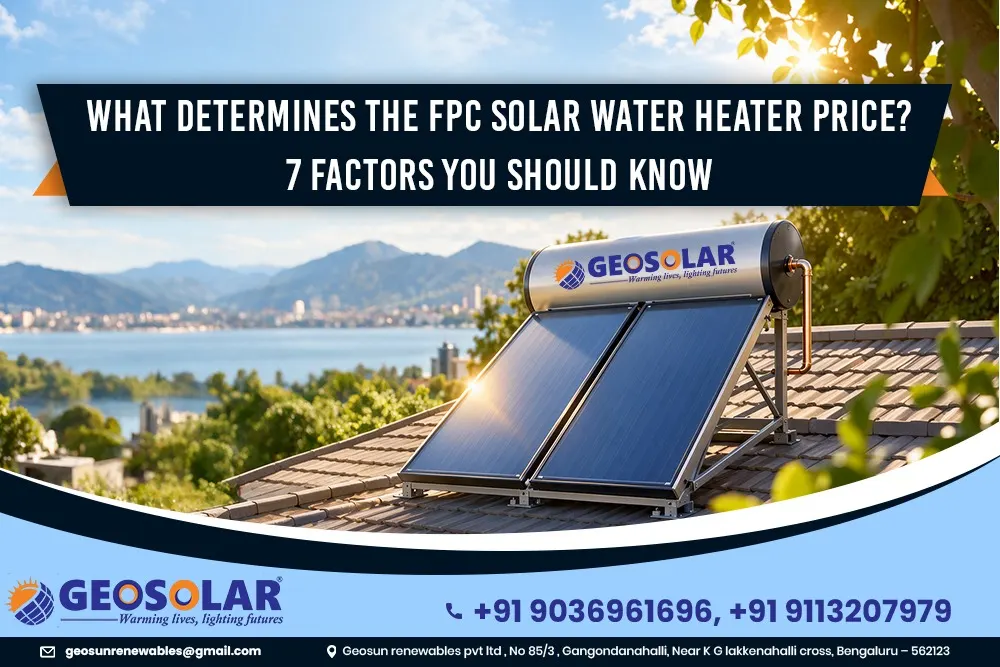
When homeowners and businesses consider installing a solar water heating system, FPC solar water heater price is often one of the first questions they ask. However, the final cost depends on much more than the size of the system. Factors such as collector quality, tank construction, insulation, installation, and system design can all influence the investment.
A Flat Plate Collector (FPC) solar water heater uses an absorber plate and a network of pipes inside an insulated collector to capture solar energy and heat water. FPC technology is widely used in India and offers a practical solution for reducing dependence on conventional water heating.
Here are seven key factors to consider when comparing FPC solar water heater prices.
1. System Capacity
Capacity is one of the most important factors affecting price. FPC solar water heaters are commonly available in capacities such as 100 LPD, 150 LPD, 200 LPD, 300 LPD, and larger customized configurations.
A small household may require a 100 or 150 LPD system, while hotels, hostels, hospitals, and commercial properties may need significantly larger capacities.
Rather than selecting the biggest system, calculate your daily hot water requirement and choose a capacity that matches your actual usage.
2. FPC Collector Quality
The flat plate collector is responsible for absorbing solar energy, so its construction directly affects system performance.
When comparing products, examine:
- Absorber plate and coating
- Copper riser and header pipes
- Glass glazing
- Collector box construction
- Frame material
- Manufacturing quality
A quality collector may have a higher upfront cost but can offer better heat transfer, durability, and long-term performance.
3. Storage Tank Construction
The storage tank keeps the heated water available for use and plays an important role in overall system efficiency.
When comparing the FPC solar water heater price, check the tank’s material, thickness, insulation, corrosion resistance, welding quality, and pressure rating.
A well-built tank with effective insulation can help minimize heat loss and contribute to a longer service life.
4. Insulation Quality
Good insulation is essential for retaining the heat collected during the day. Poor insulation can increase heat loss and reduce hot water availability.
Depending on the system design, manufacturers may use materials such as PUF or rockwool insulation. Consider both the insulation material and thickness when comparing products.
5. Pressurized vs. Non-Pressurized Systems
Your plumbing requirements can also influence the price. Non-pressurized FPC systems can be a practical and economical option where high water pressure isn’t necessary.
Pressurized systems may require stronger tanks, components, and plumbing connections, which can increase the overall investment.
The appropriate choice depends on your building’s plumbing setup, water pressure, number of bathrooms, and hot water demand.
6. Installation and Additional Costs
The advertised product price may not include every installation expense. Depending on the property, additional costs can include:
- Mounting structures
- Plumbing and piping
- Valves and fittings
- Transportation
- Labour
- Roof access
- Electrical backup systems
Always request a detailed quotation showing exactly what is included in the price.
7. Brand, Warranty and After-Sales Service
The manufacturer you choose can also affect pricing. Instead of selecting a system based solely on brand or price, compare product specifications, warranty coverage, installation support, spare parts, and after-sales service.
A dependable service network can be valuable throughout the life of your solar water heater.
How to Compare FPC Solar Water Heater Prices
Factor | What to Compare |
Capacity | LPD and daily hot water demand |
Collector | Absorber, coating, pipes and glazing |
Tank | Material, thickness and construction |
Insulation | Type and thickness |
System | Pressurized or non-pressurized |
Installation | Labour, plumbing and mounting |
Warranty | Product and component coverage |
Service | Spare parts and after-sales support |
8. Is a Higher FPC Solar Water Heater Price Worth It?
The most expensive system isn’t necessarily the best, and the cheapest option may not provide the best long-term value. What matters is what you receive for your investment.
Consider efficiency, durability, heat retention, capacity, installation quality, warranty, and expected energy savings before making your decision.
Instead of asking only, “What is the FPC solar water heater price?”, ask, “What features and long-term value am I getting for that price?”
9. Choose an FPC Solar Water Heater from Geo Solar Heater
At Geo Solar Heater, FPC solar water heating solutions are designed with components such as selective absorber coatings, copper riser and header pipes, durable glazing, effective insulation, and robust collector construction.
Choosing a system based on your property’s hot water requirements can help you make a smarter investment and enjoy reliable solar-powered water heating for years to come.
Apartment installations often involve shared rooftop areas, plumbing infrastructure, and common facilities. Therefore, the association should review building rules, rooftop access, structural considerations, and any applicable local requirements before installation.
In Bangalore, solar water heating has also been linked to building approval requirements in certain contexts, so apartment developers and associations should verify the current applicable regulations before undertaking a new installation.