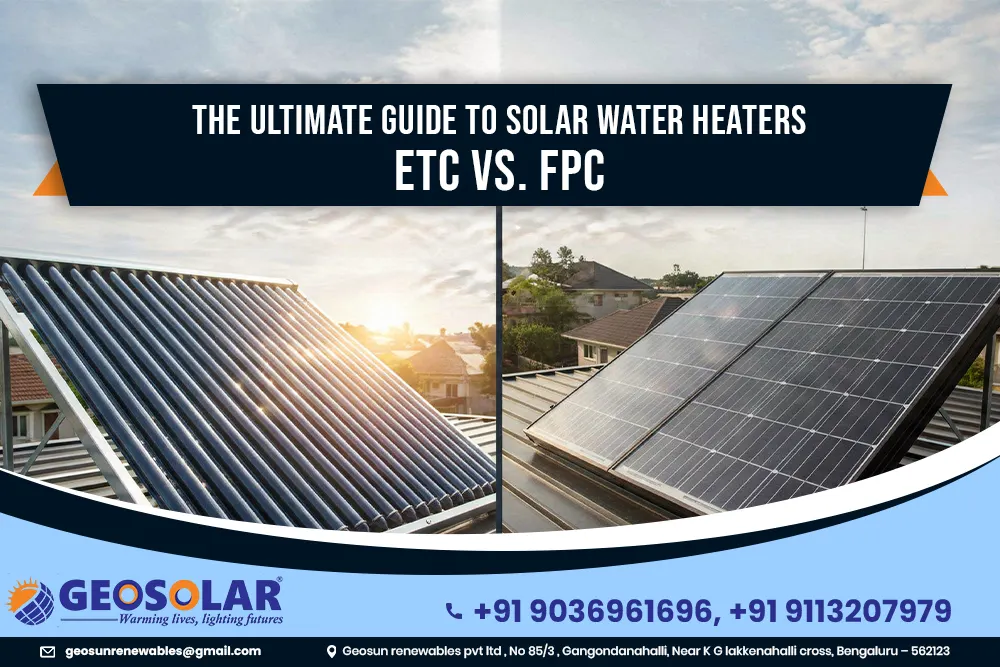
If you’re thinking about a solar water heater for your home or business, understanding the two main technologies available today will help you make the right choice. Solar water heaters are an eco-friendly way to generate hot water using the sun’s energy, cut your energy bills, and reduce your carbon footprint. They are especially appealing in India where strong sunlight makes solar heating very efficient.
In this guide we’ll compare the two most common types of solar water heating collectors — Evacuated Tube Collectors (ETC) and Flat Plate Collectors (FPC) — and show why a solution from Geo Solar Heaters could be the smarter pick for most households.
How Solar Water Heaters Work
Both ETC and FPC systems harvest sunlight and transfer it into heat that warms water, which is stored in an insulated tank for use. The big difference lies in how they collect and retain that heat.
ETC vs. FPC: What’s the Difference
Here’s a straightforward look at how the two technologies stack up:
Evacuated Tube Collectors (ETC)
- Made of multiple glass tubes with a vacuum between layers to reduce heat loss.
• Excellent at capturing sunlight from various angles throughout the day.
• Generally more efficient at heating water, especially when sunlight isn’t direct.
• Can reach higher temperatures faster and with less heat loss than flat plates.
• Each tube can be replaced individually if damaged, reducing long-term maintenance costs.
• Usually requires less roof space for the same heating output.
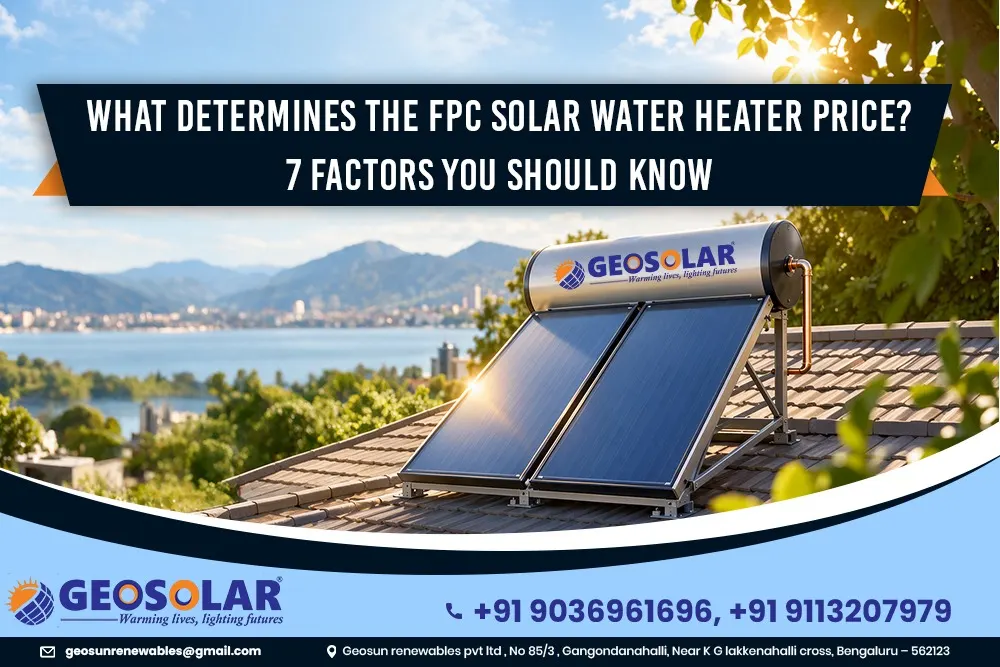
Flat Plate Collectors (FPC)
- Consist of a flat absorber panel covered by a glass plate.
• Very robust and durable in steady, hot climates.
• Works well in strong, direct sunlight.
• Often has a long expected life with fewer fragile parts.
Which One Should You Choose?
The short answer is: for most climates and year-round hot water needs, ETC systems edge out FPC in efficiency and performance.
Here’s why:
Better Performance in Variable Conditions
ETC systems do a great job even on cloudy days or when sunlight isn’t at its peak. That makes them a strong performer across seasons and in areas where weather changes often.
Higher Heat Output
Because of how they are designed, ETC systems can produce hot water faster and at higher temperatures than many FPC systems. This means more reliable hot water with less dependency on peak sunshine.
Lower Long-Term Costs
Although ETCs can have a slightly higher upfront cost, the efficiency gains and relatively low maintenance help you save more over time.
Space and Flexibility
ETC arrays are usually lighter and easier to fit into more roof types without needing as much structural support.
Why Choose Geo Solar Heaters
If you’re ready to make the switch, Geo Solar Heaters provides tailored solar water heating systems that combine effective technology with thoughtful design. They offer both ETC and FPC systems, and their expertise lies in matching the right solution to your needs.
Here’s what sets them apart:
Customized Solutions for Your Space
Geo Solar Heaters assesses your location, hot water needs, and roof setup to design a system that fits perfectly.
Professional Installation and Support
Their team handles installation and offers ongoing support and service, so you don’t have to manage the technical side yourself.
Efficiency and Sustainability Built In
Their systems are designed to maximize sunlight usage and reduce dependence on grid electricity, shrinking your monthly bills and environmental impact.
Strong Energy and Carbon Savings
By switching to a Geo Solar Heaters system, you’re tapping into a clean energy source that significantly lowers carbon emissions while providing reliable hot water every day.
Getting Started
Choosing the right solar water heater is an investment in comfort and sustainability. A good first step is to assess your daily hot water needs and roof orientation. Then, talk with a specialist who can recommend an ETC or FPC system sized for your household.
With an ETC-based solar water heater from a provider like Geo Solar Heaters, you get a balance of strong performance, lower running costs, and a reduced environmental footprint. It’s a solid choice if you want dependable hot water without high energy bills.